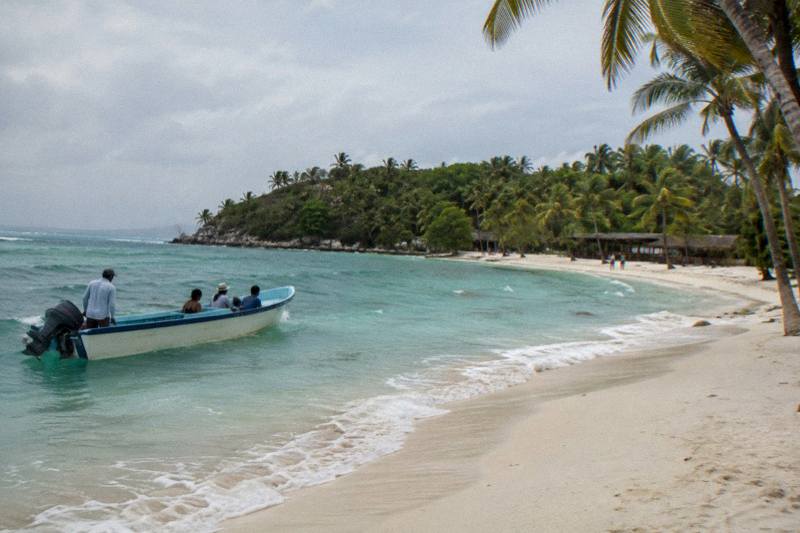
What Is Cayo Levantado Known For?
What Cayo Levantado is known for: the Bacardi Island nickname, the public beach, the resort half, whale season in Samana Bay, and the day trips that visit the island.
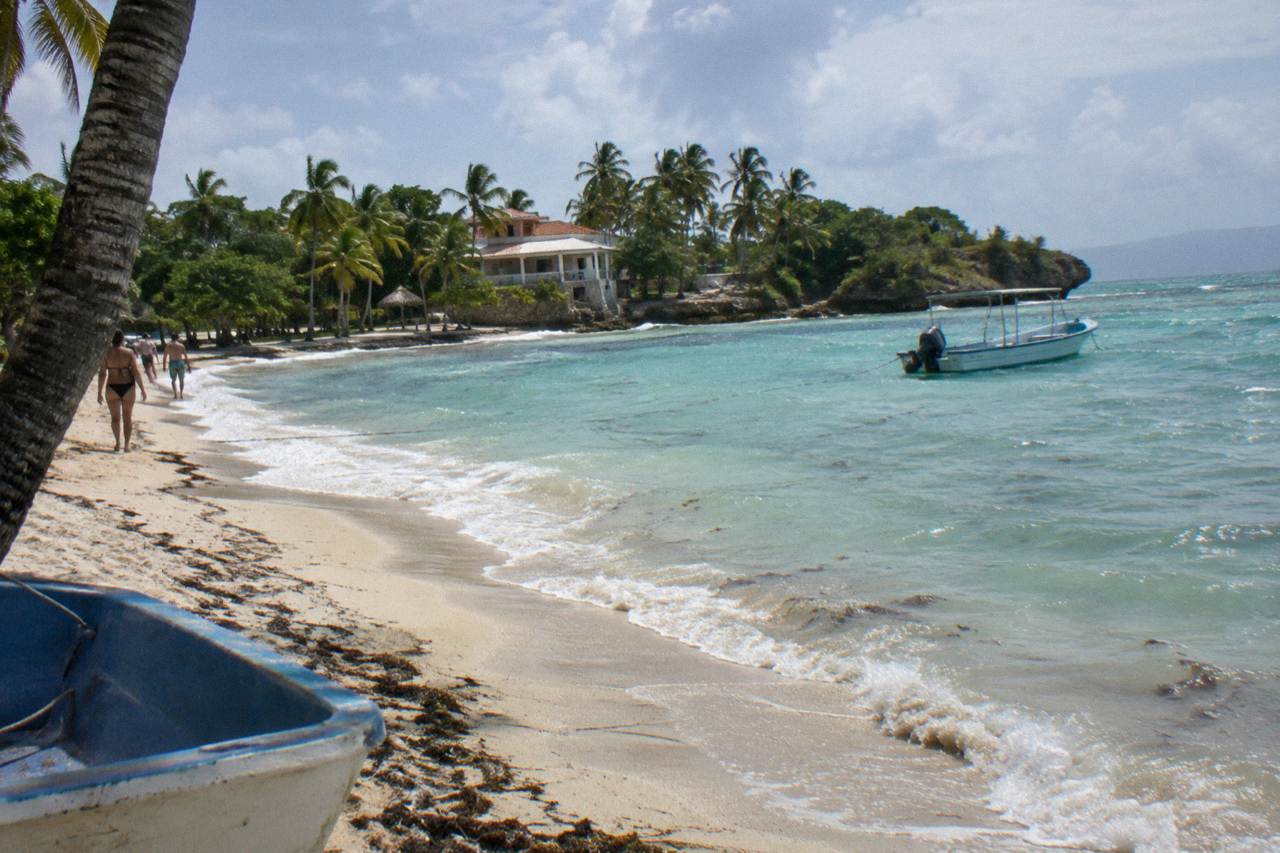
Cayo Levantado is known for a small palm-covered public beach in Samana Bay, for the Bacardi Island nickname it picked up when a Bacardi commercial was filmed there in the 1970s, and for sitting about 5 km from Samana, which makes it the natural beach stop on the peninsula's whale-watching, waterfall and mangrove tours. The public side has the beach and fresh fish; a luxury resort occupies the other half of the island. That split between the resort side and the public beach confuses a lot of first-time visitors, so if you're unsure what your day on the island actually covers, our guide to what's included on Cayo Levantado explains how each side works.
That is the short version, and it already explains why this island keeps appearing on itineraries from five different departure towns. It is small, roughly one square kilometre, so it never takes long to understand: one beach, one hotel, one bay. Travelers also call the island Cayo Escondido, though that name lives mostly in travel chatter rather than in official documents, and the island's documented names are Cayo Levantado and Bacardi Island. The Dominican film commission's own location page for the island records the essentials: about 5 km from Samana, boat taxis leaving regularly from the port on Avenida Marina, a public beach with fresh fish, and a hotel holding the other half of the island. If you're weighing whether this island beats Saona or the islets of Los Haitises for a day on the water, our comparison of the Dominican Republic's best island excursions lines up the costs, crowds and travel times side by side.
The island earned its fame in a particular order. First came the beach itself, a strip of pale sand and calm turquoise water that photographs like a brochure. Then came the commercial, which gave the island a second name that stuck harder than anyone expected. Then came whale watching, because Samana Bay is a Marine Mammal Sanctuary, declared in 1986, and every winter humpbacks gather in the same waters the island sits in. Finally came the combo tours, which bolt the island onto waterfalls, mangrove caves and long beach days, and which now make up most of the island day trips on sale.
For a first-time visitor deciding whether to spend a day here, the honest framing is this: the island is a beach stop, sometimes a very good one, that is almost always combined with something else. This article walks through what it is known for piece by piece, what each thing actually looks like on the ground, and which trips deliver which parts. The full destination rundown lives in the Cayo Levantado island guide, and the name story gets its own treatment in Bacardi Island and Cayo Levantado names explained.
If you already know you want to visit, three formats cover most travelers: a full-day catamaran excursion from Punta Cana, a simple boat day from Samana, or a whale-and-island combo in season.
Why Is Cayo Levantado Called Bacardi Island?
The island carries the Bacardi name because a Bacardi rum commercial was filmed on its beach in the 1970s, and the image stuck so completely that many visitors know the island only as Bacardi Island. The Dominican film commission records the association on its official location page. No documented detail beyond the decade is confirmed, so the year, the director and the ad itself stay out of the story.
The nickname outperformed the product. A Bacardi commercial filmed on this postcard beach left behind a name that now appears on tour titles, hotel listings and half the questions people type about this island. The film commission's page for the island, which catalogs Dominican locations for productions, notes the commercial and the decade and stops there, which is exactly where an honest account should stop too.
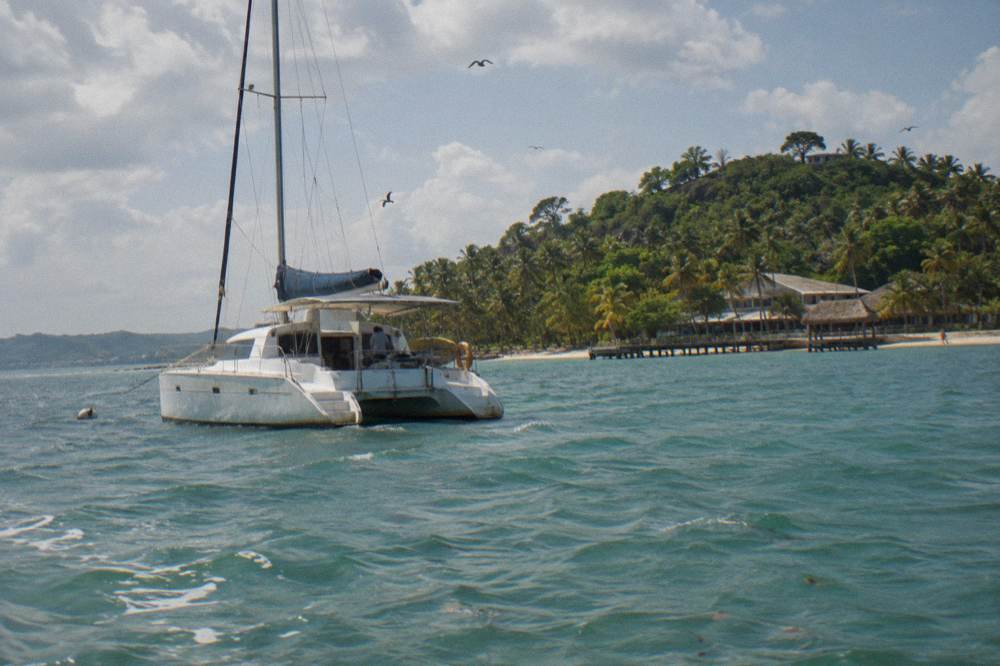
What the nickname captures is real. The beach on the public side of the island is the kind that made Caribbean advertising a genre: pale sand, palms leaning toward the water, and a bay shallow enough that the turquoise reads from a distance. Visitors arriving by boat see the shape of the island, roughly a square kilometre with a highest point of 24 m, and the beach opens up on the landing side.
The two-name situation creates practical confusion. Some tours sell the island as Cayo Levantado, some as Bacardi Island, some as both in one title, and a few listings on this site's roster use the names interchangeably in a single sentence. They are the same place, and the site's names guide covers the full history in detail. When a tour title says Bacardi Island and another says Cayo Levantado, the difference that matters is not the island but the departure town, the duration and the stops.
There is a third name floating around, Cayo Escondido, used by some travelers as an alternative. No independent source documents it as an official or historical name, so it is best treated as a travelers' alias rather than a fact about the island. The documented pair is Cayo Levantado and Bacardi Island, and either one will get you understood in Samana.
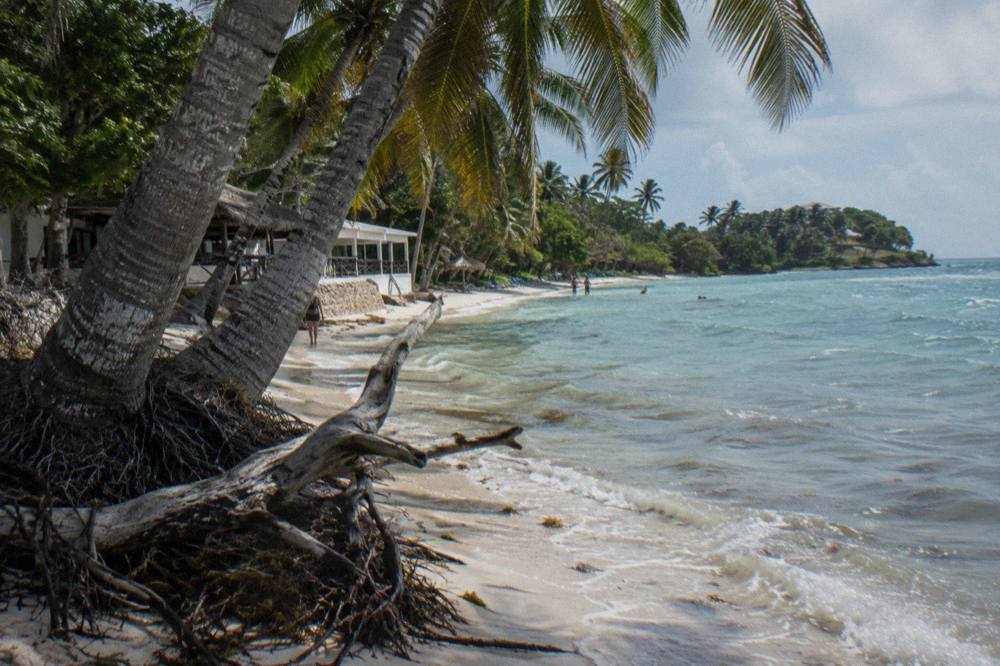
The commercial also explains something visitors notice immediately: the beach is built for pictures. The public side is compact, and the composition of sand, palms and water that sold rum in the 1970s still sells day trips now. That compactness cuts both ways, and the crowd question deserves its own section below.
Where Is Cayo Levantado And How Do You Reach It?
Cayo Levantado sits in Samana Bay about 5 km, or 3 miles, from the town of Samana, reached by a short boat taxi crossing that leaves regularly from the port on Avenida Marina. The island is roughly one square kilometre. Punta Cana visitors reach it on full-day tours that cross by road first, a drive of roughly 322 km, about 5 hours 8 minutes as a free-flow estimate.
The geography is the whole story of the island's popularity. Samana Bay funnels the peninsula's tourism through one town, and the island sits in the middle of the bay like a staging point. From Samana itself, the crossing is short enough that a simple boat day works: the Cayo Levantado Day Trip by Boat, rated 4.7 from 39 reviews and from $28 per person, lists a 7-hour boat day with a live guide and free cancellation. It is the cheapest island day on the roster and the purest version of the trip, no waterfalls, no horses, just the crossing and the beach.
From farther away the island becomes a component. Punta Cana departures dominate the roster because that is where most visitors stay, and every one of those tours spends hours on a bus before it ever touches water. The route runs north and then west around the bay; the free-flow driving estimate from the Bávaro hotel area to the Samana Malecón is 5 hours 8 minutes over 322 km, and blogs commonly quote 4 to 4.5 hours, so a realistic day is long by design. Santo Domingo is closer at about 181 minutes over 165 km free-flow, Las Terrenas about 62 minutes over 36.3 km, and Puerto Plata about 243 minutes over 230 km.
| Departure town | Free-flow drive to Samana Malecón | Distance | Example island tour from the roster |
|---|---|---|---|
| Las Terrenas | about 62 min | 36.3 km | Cayo Levantado day trip from Las Terrenas, from $125 |
| Santo Domingo | about 181 min | 165 km | Los Haitises + Cayo Levantado from Santo Domingo, from $135 |
| Puerto Plata | about 243 min | 230 km | Los Haitises & Bacardi Island from Puerto Plata, from $147.25 |
| Bávaro / Punta Cana | about 308 min | 322 km | Bacardi Island Excursion with Catamaran, from $115 |
Those drive figures are estimates from routing software without traffic, and real tour days run longer because they include pickups, stops and the boat stage itself. The Punta Cana tours on the roster run 8 to 13 hours door to door, and the listing durations are the honest number to plan around, not the drive alone.
One logistics note worth knowing before you book anything: the crossing itself is included in every tour on the roster, and prices depend on the operator. There is no verified government entry fee for the public beach, and any figure quoted on forums should be treated as anecdote rather than fact. If a deal seems to price the island separately from the boat, read the listing's inclusions line before assuming anything.
What Is The Beach On Cayo Levantado Actually Like?
The public beach is a compact strip of white sand with calm, clear, shallow water, shaded by palms, with simple food and drink stalls serving fresh fish, public bathrooms in two locations, and small shops selling handmade goods. The island is small enough to feel busy when several boats land at once, and mornings are calmer than midday. Water shoes help on the rocky edges.
The beach delivers what the nickname promises, with one honest caveat: scale. This is not a coastline you walk for an hour; it is a beach you can see the ends of. What it does with its size is concentrate. The sand is soft, the bay water is calm and clear enough for swimming and beginner snorkeling, and the tropical fish around the nearby reef areas are commonly reported by visitors. Snorkel gear is listed as included on some tours, including the featured catamaran excursion from Punta Cana.
The food side is a genuine part of the island's reputation. The public side is known for fresh fish served at simple stalls and restaurants, plus tropical drinks and beers, and many tours build lunch on the island into the day. Buffet lunch on the beach appears in the inclusions of several Samana-based trips, including the Cayo Levantado Island Boat Trip with Buffet Lunch, from $67 per person and rated 4.1 from 38 reviews. The two halves of the island answer different questions, and the public side answers the one day visitors ask: where do we eat and swim.
Crowds are the factor most worth planning around. The island has one public beach, and when a whale-watching boat, a catamaran and a cruise tender arrive in the same window, the beach compresses. Sources consistently recommend arriving early for the calmer experience, and the film commission notes there may be restrictions for visits on days when large cruise ships dock off the island. That sentence is worth reading twice if your day trip happens to coincide with a port call in Samana, which cluster mainly from November to March.
How Does The Resort Split The Island?
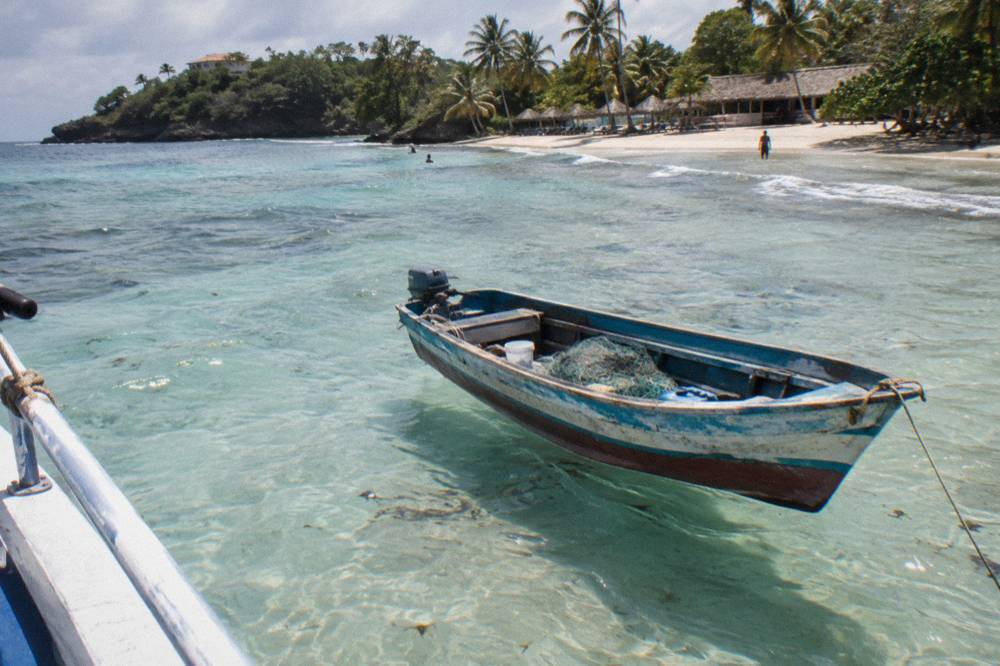
A luxury all-inclusive resort occupies half of Cayo Levantado, and its beach is restricted to guests, while the public side carries the beach and food stalls that day visitors use. The two sides do not mix, and no tour on the roster sells access to the resort's private beach. Day trips land on the public side and stay there. If you're traveling with children, our straight answer on whether Cayo Levantado is adults only explains which parts of the island actually work for families.
This split is the single most misunderstood fact about the island, and it generates a steady stream of confused searches about day passes, all-inclusive access and whether the island is private. It is not private. Roughly half of it is a resort, the rest is public, and the public half is where every boat from Samana lands. The resort runs its own boat access for guests, which keeps the two flows of people separate from the moment they leave the mainland.
For day visitors the practical question is not whether the split exists but whether it matters, and mostly it does not. The public beach, the food, the bathrooms and the swimming are all on the public side, and the resort half sits behind its own boundary. Visitors sometimes ask about buying a day pass into the resort, and the verified answer is that no reliable public pass price exists to quote; the honest move is to book a tour that includes what you want on the public side, or to stay at the resort itself if that is the experience you are after. The deeper comparison lives in the resort versus public beach guide.
What the resort does give the island is a strange double identity. Day trippers and resort guests share the same beaches and the same water, just from different sides of the island. Stripped down to one line, that is the fairest summary: for a beach day, the boundary is invisible unless you walk into it.
Why Is Cayo Levantado Known For Whale Watching?
Because it sits inside Samana Bay, which the Dominican Republic officially declared a Marine Mammal Sanctuary in 1986, and every winter humpback whales migrate to these waters between January 15 and March 30. Whale-watching tours leave from Samana Bay and commonly pair the watching with beach time at Cayo Levantado. Sightings are never guaranteed.
The sanctuary is the reason the peninsula has a whale season at all. The official tourism body records the dates, January 15 to March 30, and the 1986 declaration, and boats run from the bay throughout that window. The pairing with the island is natural geography: the boats pass near the island's waters on their routes, so operators fold in a beach stop and a buffet lunch, and the combo becomes a full day. February and March are commonly described as the strongest viewing months, and morning departures get the better sea conditions.
The roster's most reviewed whale-and-island trip is the Whale Watching and Cayo Levantado Full Day Tour from Samana, rated 4.7 from 224 reviews and from $84 per person, with buffet lunch at the island and free cancellation listed. A Punta Cana version runs from $169, rated 4.8 from 12 reviews, including lunch and round-trip transport. Several Punta Cana combo listings note that the whale portion only operates from mid January to mid March, which matches the official season window closely enough to plan around.
There is also a land option most visitors never hear about. Punta Balandra, on the road from Samana to Las Galeras, is an official vantage point for watching whales from shore, and the small Whale Museum in Santa Bárbara de Samana tells the sanctuary's story. Neither replaces a boat trip, but both are free of seasickness, which reviewers of the bay crossings mention often enough to take seriously. If you are prone to motion sickness, morning trips and medication are the standard advice, and the crossing to the island is described in reviews as choppy on some days.
The sanctuary point matters here: the island is not merely near the whales, it sits inside the protected area of Samaná Bay, and the whale-watching trips that run each season are routinely paired with time on its beach. The full seasonal rundown lives in the whale watching combo guide.
What Combo Tours Is Cayo Levantado Famous For?
Cayo Levantado is the beach anchor of the Samana Peninsula's three big combo formats: waterfall tours that add horseback riding at Salto El Limón, mangrove and cave tours through Los Haitises National Park, and twin-beach trips pairing the island with Playa Rincón. The roster carries all three, most departing Punta Cana, with prices from about $110.40 to $179 per person.
The combos exist because the island alone is a half-day pleasure, and the drive from Punta Cana is a full-day commitment. Operators solved that by stringing the peninsula's highlights into single itineraries, and the island is nearly always the lunch-and-swim finish.
The El Limón combos are the biggest family. Horses carry visitors through forest and coconut groves to the waterfall, then the day continues to the island for beach time and food. The roster's El Limon Waterfall and Bacardi Island Tour from Punta Cana, from $149 per person and rated 3.6 from 125 reviews, includes a buffet lunch with two drinks and hotel pickup. Reviewers describe the waterfall segment as a highlight while some raise horse-welfare concerns and prefer walking, a split that repeats across this tour family honestly.
The Los Haitises combos trade horses for boats and caves. Trips cruise the bay's mangroves, pass karst islets with pelican and frigatebird colonies, and stop at caves with Taíno pictographs before finishing at the island. The most reviewed tour on this entire site's roster is exactly this format: Samaná: Los Haitises National Park & Cayo Levantado Island, rated 4.0 from 252 reviews and from $50 per person, the cheapest full island-plus-park day available.
The Playa Rincón pairings suit travelers who want beaches over activities. Rincón is a long, undeveloped palm-backed beach reached by boat or rough road, and the twin-beach itineraries split the day between it and Cayo Levantado. One runs from Punta Cana at from $145 per person, rated 4.3 from 11 reviews, with lunch, breakfast and drinks on board included.
Choosing among the three formats is mostly a choice of what you want the middle of your day to be: horses and a waterfall, a boat through mangroves and caves, or a second, wilder beach. The site's Samana excursions compared guide lines them up side by side, and each family has its own deep-dive guide.
When Is The Best Time To Experience What Cayo Levantado Is Known For?
January to March is the window when everything the island is known for happens at once: whale season runs officially from January 15 to March 30, cruise and visitor volumes peak, and rainfall sits at its lowest of the year, especially February and March. October is the quietest and often cheapest month. Hurricane season runs June 1 to November 30.
The overlap is the reason winter is the famous season, and also the reason it is the crowded one. Whales, good weather and cruise calls stack into the same twelve weeks, and the island's one public beach absorbs all of it. A February visit buys you the full brochure version of the peninsula, whales in the morning and turquoise water in the afternoon, at the cost of sharing both with more boats.
The rest of the year trades components away. April to June drops the whales but keeps the sea warm and the crowds thinner. September to November is wetter, with the higher rainfall totals and rain-day counts, and it sits inside the official Atlantic hurricane season, though direct major hits on this coast are historically rare and tropical storms are the more common event. Sea temperatures stay between 26 and 29 C year round, so swimming is never the variable; rain and boat traffic are.
For travelers whose priority is the beach rather than the whales, the shoulder months are arguably the better buy. The island tour prices on this roster do not move much seasonally, but availability does, and reviewers consistently note that the midday beach feels busy whenever several boats coincide. If you can only travel in peak weeks, morning departures and early island arrival are the standard mitigations.
Common Questions About Cayo Levantado
What Is Cayo Levantado Known For?
It is known for a small white-sand public beach in Samana Bay, the Bacardi Island nickname from a 1970s Bacardi commercial filmed there, fresh fish stalls, a luxury resort occupying half the island, and its role as the beach stop on whale-watching, El Limón waterfall and Los Haitises combo tours.
Is Cayo Levantado The Same As Bacardi Island?
Yes. Cayo Levantado is the island's documented name and Bacardi Island is the nickname it earned when a Bacardi commercial was filmed on its beach in the 1970s. Tour titles use both names for the same place.
How Far Is Cayo Levantado From Samana?
About 5 km, or 3 miles, across Samana Bay, reached by a short boat taxi crossing that leaves regularly from the port on Avenida Marina. Every tour on the roster includes the crossing.
Can You Visit The Resort Side Of Cayo Levantado?
The resort's beach is restricted to its guests, and day tours land on the public side, which has the beach, the food stalls and the bathrooms. No reliable public day-pass price exists to quote.
When Can You See Whales Near Cayo Levantado?
The official whale watching season in Samana Bay runs January 15 to March 30, inside the Marine Mammal Sanctuary declared in 1986. Sightings are never guaranteed, and morning departures tend to get calmer seas.
What Is The Cheapest Way To Visit Cayo Levantado?
From Samana, a simple boat day trip runs from $28 per person and lasts about 7 hours. Combo tours cost more and add waterfalls, mangrove caves or whale watching, with the Los Haitises combo from $50 and Punta Cana full days from $115.
Whether the island's reputation pulls you for the beach, the nickname, the whales or the combos, the practical next step is the same: pick the departure town that matches where you are staying, and let the itinerary's middle decide between horses, mangroves or a second beach. Cayo Escondido tracks the live listings for all of them, and the trip picker narrows the roster by what matters to you.